Dollars Across the Divide: How Pakistani-American Remittances Are Quietly Transforming Lives and Livelihoods Back Home
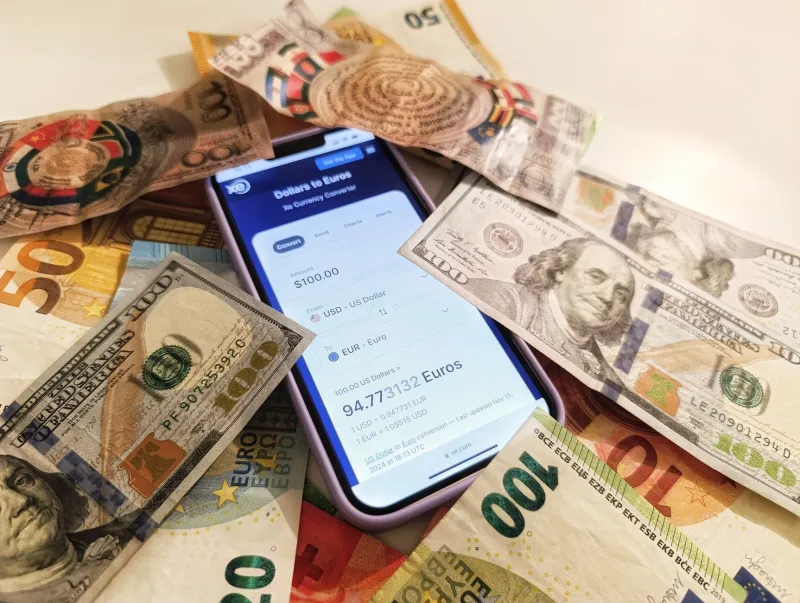
In a modest apartment in Houston, Texas, Farhan Siddiqui logs into a mobile transfer app on the first of every month. Within seconds, the equivalent of several hundred dollars lands in his mother's account in Faisalabad — enough to cover her utility bills, top up his younger sister's university fees, and set aside a small sum toward a family savings goal that has been building for three years. Farhan's story is unremarkable in the best possible way. Across the United States, hundreds of thousands of Pakistani-Americans perform the same ritual, and collectively, their contributions add up to something extraordinary.
According to data from the World Bank and Pakistan's State Bank, remittances flowing into Pakistan from the United States consistently exceed three billion dollars annually, making the Pakistani-American diaspora one of the country's most significant sources of foreign exchange. To put that figure in perspective, it rivals or surpasses the value of many bilateral aid packages and foreign direct investment inflows. Unlike those formal financial instruments, however, remittances arrive directly in the hands of ordinary families — and the downstream effects are profound.
A Financial Lifeline That Reaches Where Aid Cannot
Foreign assistance, however well-intentioned, is filtered through governmental structures, procurement processes, and administrative hierarchies before it reaches the communities it is meant to serve. Remittances operate on an entirely different logic. A wire transfer from a software engineer in New Jersey or a physician in Chicago lands in a rural Punjab village within hours, bypassing bureaucratic friction entirely.
Research published by development economists consistently shows that remittance-receiving households in Pakistan spend a disproportionately high share of those funds on education, healthcare, and housing improvements — the very categories that drive long-term human development. In districts of Khyber Pakhtunkhwa and Azad Kashmir, where Pakistani-American communities maintain especially strong ties, remittance inflows have been linked to measurable increases in school enrollment rates, particularly among girls. The money does not merely sustain existing conditions; it actively elevates them.
Dr. Nadia Qureshi, a development economist at a Washington, D.C.-based policy institute who has studied South Asian remittance corridors for over a decade, frames it plainly: "When you trace the dollar from a diaspora worker's paycheck to a family in rural Sindh, you often find it doing more targeted good than a comparable dollar routed through an aid program. The information asymmetry problem disappears — the sender knows exactly what the recipient needs."
The Corridors of Capital: How the Money Moves
The mechanics of remittance transfer have changed dramatically over the past decade. Traditional wire services like Western Union and MoneyGram, once dominant, now compete with a new generation of fintech platforms — Remitly, Wise, and several Pakistan-specific applications — that have compressed transfer fees and accelerated delivery times. For Pakistani-Americans, this technological shift has been meaningful. Lower fees mean more money reaches the intended recipient, and real-time transfers have made it easier to respond to emergencies without delay.
Pakistan's government has also taken deliberate steps to incentivize formal remittance channels through the Roshan Digital Account program, which offers diaspora members competitive returns on deposits made from abroad. By encouraging transfers through regulated banking channels rather than informal hawala networks, these initiatives both improve the reliability of the data and ensure that foreign exchange reserves are bolstered rather than bypassed.
Still, informal channels persist in some communities, particularly among first-generation immigrants with longstanding trust relationships in hawala networks. Analysts note that while hawala carries regulatory risks, it often reflects a rational response to historical banking exclusion rather than any intent to circumvent oversight.
Seed Capital for a New Generation of Entrepreneurs
Beyond covering household expenses, remittances are increasingly functioning as startup capital for small and medium enterprises in Pakistan. In cities like Lahore, Karachi, and Peshawar, it is not uncommon to find a clothing boutique, a small manufacturing unit, or a food processing operation that was seeded by savings accumulated in America.
Imran Malik left Lahore for Dallas in his late twenties, worked for nearly a decade in logistics management, and returned home with enough capital — supplemented by consistent savings sent to a dedicated family account — to open a cold-storage facility serving local agricultural producers. "My American salary alone wasn't enough to build something like this in Pakistan," he said during a community event organized by the Pakistan-American Business Association. "But ten years of disciplined transfers, combined with what I brought back, made it possible. Now I employ fourteen people."
This pattern of diaspora-enabled entrepreneurship is gaining recognition among development practitioners as a meaningful complement to formal investment promotion. Unlike foreign direct investment, which is sensitive to macroeconomic indicators and political risk ratings, diaspora capital is driven by personal commitment and family loyalty — factors that persist even when institutional investors retreat.
The Emotional Economy: More Than a Transaction
To reduce remittances to a financial statistic is to miss something essential about what they represent. For many Pakistani-Americans, the monthly transfer is an act of sustained connection — a way of participating in a family's daily life from thousands of miles away. It is also, at times, a source of complicated pressure.
Community counselors and diaspora advocates in cities with large Pakistani-American populations — New York, Chicago, Houston, and the greater Washington metropolitan area — note that the expectation of regular financial support can weigh heavily on immigrants, particularly those still navigating the early, uncertain years of building a career in the United States. The obligation is rarely resented, but it is also rarely discussed openly.
Organizations such as the Pakistani American Alliance and various mosque-based community networks have begun hosting financial literacy workshops that address both sides of this dynamic: helping newer immigrants plan remittances sustainably, and encouraging families in Pakistan to build toward greater financial independence over time.
Toward a Stronger Framework for Diaspora Finance
The scale and consistency of Pakistani-American remittances make a compelling case for treating the diaspora not merely as a cultural constituency but as a genuine development partner. Policymakers on both sides of the Pakistan-US relationship have opportunities to deepen this role — through diaspora bond programs, matched-savings initiatives, and streamlined investment pathways that allow diaspora members to direct capital toward sectors of national priority.
For the families receiving those monthly transfers in Faisalabad, Mirpur, and Quetta, the policy architecture matters less than the reliability of the funds. But for governments and development institutions seeking to maximize impact, understanding and supporting the remittance relationship between Pakistani-Americans and their homeland represents an enormous and still-underutilized opportunity.
Farhan Siddiqui, back in Houston, is already thinking about the next chapter. His sister graduates next spring. The family savings account has nearly reached its target. The plan, he says, is to help open a small pharmacy in their neighborhood. "It started with me sending money home," he reflects. "But really, we're building something together — just from different sides of the world."