Ballots and Belonging: The Rising Political Power of Pakistani-Americans in US Elections
For much of the twentieth century, the Pakistani-American community occupied a distinctive but largely apolitical space in the American social landscape — celebrated for professional achievement, anchored in tight-knit community networks, yet largely absent from the formal structures of electoral participation. That dynamic has shifted considerably. Today, Pakistani-Americans are registering in greater numbers, running for office at multiple levels of government, and making deliberate choices about how their collective voice shapes both domestic policy and the broader trajectory of US-Pakistan relations.
A Community Coming Into Its Own
According to estimates from the American Community Survey and advocacy organizations such as the Pakistani American Leadership Center (PALC), the Pakistani-American population in the United States has grown to approximately 600,000 to over one million individuals, depending on methodology. This figure, while modest compared to some other South Asian communities, carries outsized significance because of where these Americans live.
Large concentrations of Pakistani-Americans are found in New York, New Jersey, Texas, Illinois, California, and — critically — in Georgia, Michigan, and Pennsylvania, three states that have defined the outcome of recent presidential elections. Political analysts who once overlooked this demographic are beginning to reconsider. In closely contested congressional districts, a well-organized bloc of several thousand engaged voters can determine the margin of victory.
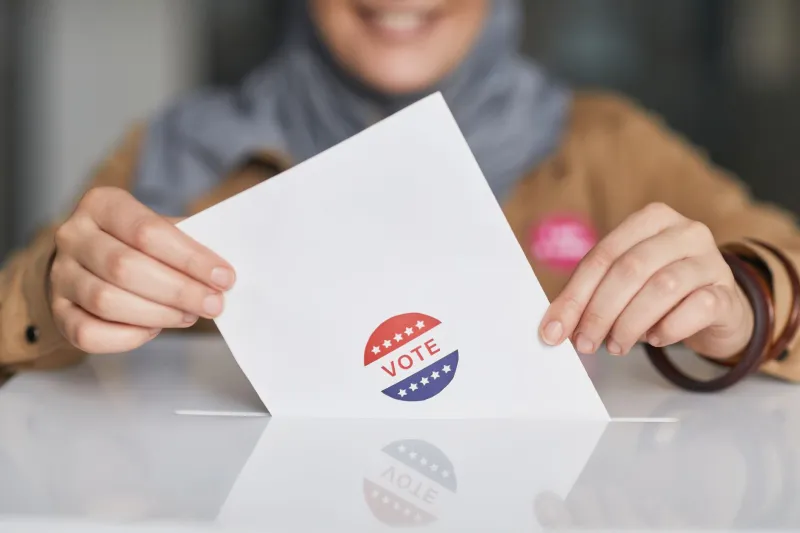
Voter registration drives led by organizations including PAKPAC and various mosque-based civic initiatives have accelerated naturalization and registration efforts over the past decade. The 2020 election cycle, in particular, saw a notable uptick in Pakistani-American civic engagement, driven in part by heightened awareness of immigration policy, civil liberties concerns following post-9/11 surveillance programs, and a broader sense among younger Pakistani-Americans that silence is no longer an acceptable political posture.
What Pakistani-Americans Are Voting On
Unlike some ethnic communities whose political preferences align neatly with a single party, Pakistani-Americans present a more nuanced profile. Polling and community surveys suggest a complex set of priorities that do not map cleanly onto standard Democratic or Republican platforms.
On economic matters, many Pakistani-American households — disproportionately represented in medicine, engineering, technology, and small business ownership — hold fiscally moderate or conservative views. On social and civil liberties issues, particularly those relating to religious freedom, surveillance, and immigration reform, the community has leaned toward candidates who demonstrate a genuine commitment to protecting minority rights.
Foreign policy considerations also carry significant weight. US-Pakistan relations, military aid, visa reciprocity, and the treatment of Muslim-majority countries in American foreign policy all register as meaningful issues during election cycles. Candidates who demonstrate an informed, respectful understanding of Pakistan's geopolitical complexity tend to earn greater trust within the community.
Generational differences further complicate the picture. First-generation immigrants often prioritize economic stability and professional opportunity, while second- and third-generation Pakistani-Americans — many of whom came of age in the post-9/11 era — tend to place civil rights, representation, and foreign policy accountability at the center of their political identities.
Representation at Every Level
Perhaps the most visible indicator of the community's political maturation is the emergence of Pakistani-American candidates seeking and winning elected office. From city councils in New Jersey and Texas to state legislative chambers and beyond, Pakistani-Americans are no longer content to influence politics solely through donations and endorsements. They are seeking the seats themselves.
This shift toward direct representation carries profound implications. Elected officials of Pakistani heritage bring an intimate understanding of the issues facing their constituents — from navigating the immigration system to addressing Islamophobia in public schools — and they also serve as a living bridge between American democratic institutions and the Pakistani-American community's ongoing relationship with its homeland.
Advocacy organizations have invested substantially in candidate training, fundraising networks, and get-out-the-vote infrastructure. The sophistication of these operations has grown markedly, reflecting a community that has moved beyond reactive politics into proactive civic architecture.
Implications for US-Pakistan Diplomatic Relations
From a diplomatic standpoint, the growing electoral influence of Pakistani-Americans is a development of genuine strategic significance. Diaspora communities have historically served as informal ambassadors, shaping public perception and, over time, influencing the policy priorities of elected officials who depend on their votes.
A more politically engaged Pakistani-American electorate means that issues affecting bilateral relations — visa processing times, trade agreements, security cooperation frameworks, and educational exchange programs — are increasingly subject to democratic accountability in a way they were not a generation ago. Legislators representing districts with substantial Pakistani-American populations have a tangible incentive to maintain informed, constructive positions on Pakistan-related policy.
This dynamic benefits both nations. For Pakistan, a politically active diaspora in the United States represents a channel of influence that complements formal diplomatic engagement. For the United States, a community that maintains deep cultural and familial ties to Pakistan provides an invaluable human resource for understanding a country of enormous strategic importance.
Looking Ahead
The trajectory of Pakistani-American political engagement points clearly toward greater influence, not less. Demographic projections suggest continued population growth. Naturalization rates are rising. And a generation of young Pakistani-Americans who have grown up entirely within the American political system — who attended American public schools, participated in student government, and absorbed the full texture of American civic life — is approaching peak voting age.
For those who follow the relationship between Pakistan and the United States, this is a story worth watching closely. The ballot box, it turns out, is one of the most powerful diplomatic instruments available to any diaspora community — and Pakistani-Americans are learning to use it with increasing precision and purpose.