Healing Across Borders: The Pakistani-American Medical Professionals Transforming Healthcare in Two Nations
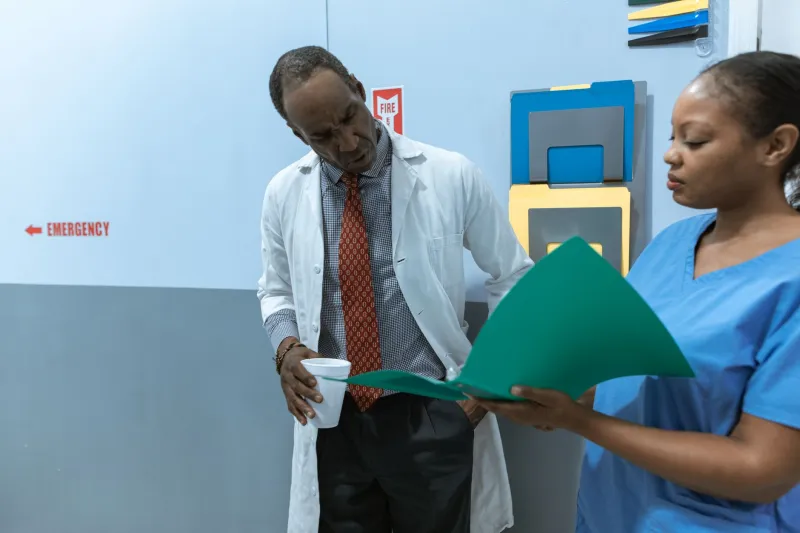
Walk the corridors of virtually any major American hospital — from the teaching institutions of Boston and Baltimore to the sprawling medical centers of Houston and Chicago — and the presence of Pakistani-American physicians, surgeons, and specialists is unmistakable. This community has established itself as one of the most consequential immigrant groups in the history of American medicine, contributing not only to the daily delivery of care but to research, administration, and the very architecture of how healthcare is organized in the United States.
Yet for many of these professionals, a hospital in New Jersey or a research laboratory in California is only part of the story. Across the Pakistani-American medical community, there runs a powerful current of commitment to the country of origin — expressed through medical missions, telemedicine partnerships, institutional capacity-building, and a quiet determination to ensure that the knowledge and resources accumulated in America find their way back to Pakistani communities that need them most.
The Scale of Pakistani-American Representation in US Medicine
The numbers are striking. The American Association of Physicians of Pakistani Descent (AAPPD), one of the primary professional organizations representing this community, estimates that Pakistani-American physicians number in the tens of thousands, with some figures placing the count above 20,000 practicing doctors across the country. This makes Pakistani-Americans one of the largest groups of internationally trained physicians in the United States, second only to Indian-Americans among South Asian medical professionals.
Their specializations span the full breadth of modern medicine. Pakistani-American physicians are disproportionately represented in internal medicine, cardiology, nephrology, oncology, and surgery — fields that require years of rigorous post-graduate training and that carry enormous responsibility for patient outcomes. In underserved communities and rural areas where physician shortages are chronic, Pakistani-American doctors have often been among the few specialists available, filling gaps that the domestic medical training pipeline has struggled to address.
Beyond clinical practice, Pakistani-American professionals hold faculty positions at medical schools, lead hospital departments, direct research programs at the National Institutes of Health, and contribute to the pharmaceutical and medical device industries. Their intellectual and institutional footprint within American healthcare is substantial by any measure.
Cultural Competency as a Clinical Asset
One dimension of Pakistani-American medical practice that deserves particular attention is the concept of cultural competency — the capacity to understand, communicate with, and effectively treat patients from diverse cultural backgrounds. For Pakistani-American physicians, this competency is not an acquired professional skill but an intrinsic characteristic of their lived experience.
Physicians who have navigated two healthcare systems, who speak Urdu, Punjabi, Sindhi, or Pashto in addition to English, and who understand the religious and dietary considerations that shape the health behaviors of Muslim patients, bring a dimension of care that is genuinely difficult to replicate through training alone. In cities like New York, Chicago, and Houston — where South Asian immigrant populations are large and growing — this kind of culturally attuned medical practice translates directly into better patient outcomes, higher rates of treatment adherence, and more trusting relationships between communities and the healthcare system.
For patients who have recently arrived from Pakistan and who may approach Western medical institutions with unfamiliarity or apprehension, a physician who can speak to them in their own language and acknowledge their cultural context is not merely a convenience. In many cases, that connection is what makes care possible at all.
Giving Back: Medical Missions and Bilateral Health Partnerships
For a significant number of Pakistani-American medical professionals, success in the United States has been accompanied by a deepening sense of obligation to Pakistan's healthcare infrastructure — a system that, despite notable achievements, continues to face substantial challenges in coverage, capacity, and access, particularly in rural and underserved regions.
Organizations such as the Aman Foundation, the Pakistan Medical Association of North America (PMANA), and numerous hospital-affiliated volunteer groups coordinate regular medical missions to Pakistan. These missions bring American-trained surgeons to perform procedures — cardiac operations, orthopedic surgeries, cleft palate repairs — that would otherwise be inaccessible to patients without means. The impact of these missions extends beyond individual procedures; they also involve training local medical staff, donating equipment, and establishing protocols that improve standards of care long after the visiting teams have returned to the United States.
Telemedicine has opened new frontiers in this bilateral exchange. Pakistani-American specialists now routinely consult on complex cases with physicians at hospitals in Lahore, Karachi, Islamabad, and beyond, using digital platforms to deliver expertise across thousands of miles. Institutions such as Aga Khan University Hospital in Karachi have developed formal partnerships with American academic medical centers, creating structured channels for knowledge transfer, research collaboration, and faculty exchange that benefit both systems.
Advancing Medical Innovation
The contributions of Pakistani-American professionals extend into the domain of medical research and innovation. Pakistani-American scientists and physician-researchers have made significant contributions to fields including cardiovascular medicine, diabetes management, infectious disease, and genomics. Several have led or participated in clinical trials that have resulted in treatments now used globally.
In the biotechnology and pharmaceutical sectors, Pakistani-American executives and researchers have played roles in developing drugs, diagnostics, and medical devices that improve lives on every continent. This innovation pipeline, fed by rigorous training and sustained by a cultural emphasis on education and professional excellence, represents one of the most enduring contributions of the Pakistani-American community to American society.
A Bridge Built in Stethoscopes and Scalpels
The story of Pakistani-American medical professionals is, at its core, a story about what happens when talent, determination, and cross-cultural identity converge. These men and women arrived in America — many through rigorous visa processes, residency matches, and professional credentialing — and built careers of extraordinary distinction. In doing so, they became something more than skilled practitioners. They became bridges.
They bridge language and culture for patients navigating an unfamiliar system. They bridge the knowledge gap between American medical innovation and Pakistani clinical practice. And they bridge the human distance between two nations whose relationship, for all its diplomatic complexity, is sustained and enriched by the lives of people who belong, in the fullest sense, to both.