Atoms, Ambitions, and Alliances: Understanding the Pakistan-US Nuclear Relationship
For most Americans, the phrase "Pakistan and nuclear" tends to summon a narrow set of associations — proliferation anxieties, Cold War-era tensions, or fragmentary news coverage that rarely captures the full diplomatic picture. Yet the nuclear dimension of Pakistan-US relations is, in reality, a layered and evolving story that touches on energy policy, regional security architecture, and the long-term strategic trust that both nations have carefully cultivated over more than seven decades of formal diplomacy.
Understanding where this relationship stands today — and where it may be headed — requires a willingness to engage with complexity rather than retreat to simplification.
A Nuclear State With Distinct Circumstances
Pakistan formally declared itself a nuclear-armed state in May 1998, following a series of underground tests conducted in the Chagai district of Balochistan. The tests were, in significant part, a direct response to India's own nuclear tests earlier that month — a reminder that South Asia's nuclear calculus is inescapably regional in character.
What distinguishes Pakistan's nuclear posture from that of several other declared or undeclared nuclear states is the degree to which it has been shaped by conventional security concerns rather than purely ideological or prestige-driven motivations. Pakistani strategic planners have long articulated a doctrine of minimum credible deterrence — a posture calibrated to maintain stability rather than project expansionist ambitions.
For American policymakers and the broader public alike, this context matters enormously. Pakistan's nuclear capabilities did not emerge in a vacuum, and evaluating them without reference to the regional dynamics that produced them leads to analytical distortions that have, at times, complicated diplomatic engagement.
The Civilian Energy Dimension
Perhaps the least discussed — and most consequential — aspect of the Pakistan-US nuclear conversation involves civilian energy infrastructure. Pakistan faces significant electricity generation challenges, with a growing population and expanding industrial base placing sustained pressure on a national grid that has historically struggled to meet demand.
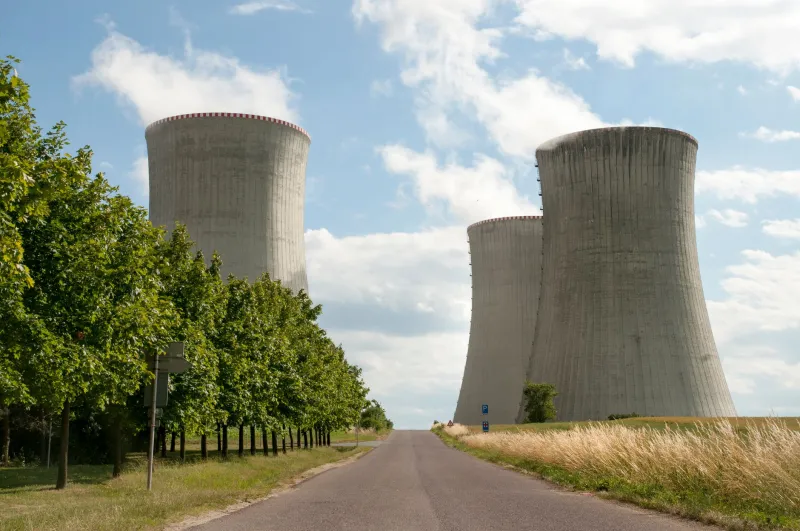
Nuclear power, in this context, represents not an abstract geopolitical symbol but a practical component of Pakistan's long-term energy strategy. The Pakistan Atomic Energy Commission (PAEC) currently operates several civilian reactors, with additional capacity under development. The country has expressed consistent interest in expanding civilian nuclear cooperation with international partners, including the United States.
The United States, for its part, has maintained a nuanced position on civilian nuclear engagement with Pakistan. Unlike the landmark 2008 US-India civilian nuclear agreement — which granted India access to American nuclear technology and fuel despite India's status outside the Nuclear Non-Proliferation Treaty (NPT) — no comparable bilateral framework has been established with Pakistan. This asymmetry has been a recurring point of discussion in diplomatic channels, with Pakistani officials and analysts frequently noting that a similar arrangement would serve both energy development goals and broader bilateral trust-building.
American energy companies and nuclear technology exporters have, at various points, expressed interest in the Pakistani market. The regulatory and diplomatic pathways to expanded civilian cooperation remain a subject of active diplomatic consideration, even as the full contours of any future agreement remain undefined.
Nonproliferation: The Shared Commitment
No honest account of the Pakistan-US nuclear relationship can avoid the proliferation concerns that have periodically tested bilateral trust. The revelations in the early 2000s regarding the activities of Pakistani metallurgist A.Q. Khan — and the illicit nuclear technology network associated with his name — represented a serious rupture that required sustained diplomatic management.
Pakistan's government moved decisively to address those concerns, placing Khan under house arrest, undertaking significant reforms to its nuclear export control architecture, and engaging with international partners on strengthened oversight mechanisms. The United States acknowledged these steps while continuing to press for robust safeguards.
Today, Pakistan maintains an extensive command-and-control framework governing its nuclear arsenal, including the National Command Authority (NCA), which oversees all matters relating to nuclear policy and security. American officials, including senior figures from the Department of Defense and the State Department, have on multiple occasions acknowledged the seriousness with which Pakistan has approached the security of its nuclear materials.
This does not mean all concerns have been permanently resolved — the nature of nonproliferation diplomacy is iterative rather than conclusive. But it does mean that the narrative of Pakistan as a uniquely irresponsible nuclear actor, which occasionally surfaces in American commentary, is substantially at odds with the more textured assessment held by those most directly engaged in the bilateral relationship.
Strategic Trust as the Underlying Currency
What ultimately governs the trajectory of Pakistan-US nuclear relations is not any single agreement or incident but the broader condition of strategic trust between the two countries. That trust has been tested at various points — most notably in the aftermath of the 2011 Abbottabad operation, which placed significant strain on intelligence and military cooperation — but it has also demonstrated a resilience rooted in the genuine convergence of interests that characterizes the relationship.
For American readers seeking to understand this dimension of the partnership, it may be useful to think of the nuclear relationship as a kind of diplomatic barometer. When broader bilateral relations are functioning well — when counterterrorism cooperation is productive, when trade and investment ties are strengthening, when people-to-people connections through the Pakistani-American diaspora are flourishing — the nuclear dimension of the relationship tends to be managed with greater flexibility and creativity. When tensions rise, the nuclear file becomes correspondingly more fraught.
This interdependence is not a weakness of the relationship. It is, in many respects, a feature — a built-in incentive for both sides to maintain the broader partnership in good working order.
Looking Ahead: Opportunities for Deeper Engagement
The coming years are likely to present genuine opportunities for progress on the civilian nuclear front. Global interest in nuclear energy as a low-carbon electricity source is experiencing a notable resurgence in the United States, with the Biden and subsequent administrations showing renewed enthusiasm for both domestic nuclear development and international nuclear cooperation as tools of climate and energy policy.
Pakistan's energy needs, its established civilian nuclear infrastructure, and its demonstrated commitment to nuclear security all position it as a credible candidate for deeper engagement within a responsible international framework. American companies active in the nuclear energy sector — from reactor design firms to fuel cycle specialists — have an obvious commercial interest in exploring what expanded cooperation might look like.
Diplomatic groundwork for such engagement will require patience, technical expertise, and a willingness on both sides to move beyond the familiar grooves of past negotiation. But the underlying logic is compelling: a Pakistan that meets more of its energy needs through civilian nuclear power is a Pakistan better positioned for economic development, political stability, and constructive international partnership.
A Relationship Worth Understanding
The Pakistan-US nuclear relationship defies easy summary. It is simultaneously a source of ongoing diplomatic complexity and a domain of genuine shared interest. It reflects both the weight of historical tensions and the possibility of a more constructive future.
For American citizens and policymakers alike, engaging seriously with this complexity — rather than defaulting to simplified narratives — is not merely an intellectual exercise. It is a prerequisite for the kind of informed public understanding that sound foreign policy ultimately requires. Pakistan and the United States are, in the fullest sense, consequential partners. The nuclear dimension of that partnership deserves the serious, sustained attention it has sometimes been denied.