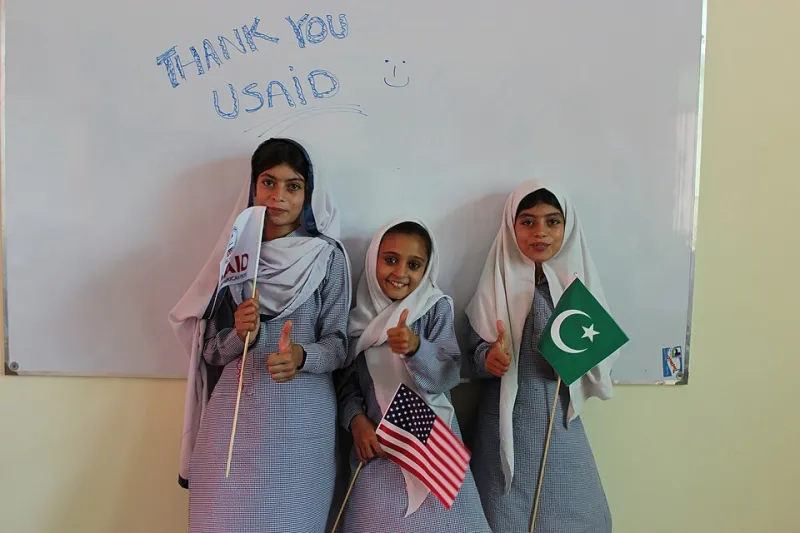
Pioneers Without Borders: The Pakistani Women Rewriting the Rules of Leadership
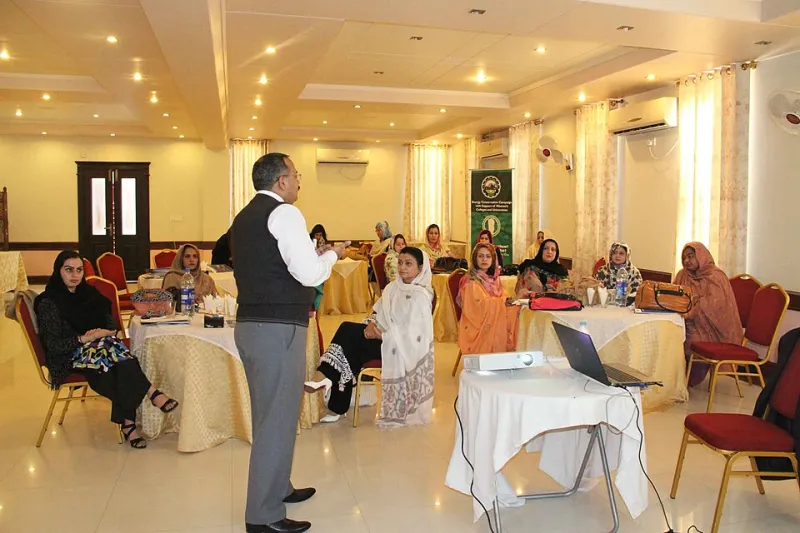
Photo: USAID Pakistan, Public domain, via Wikimedia Commons
From the chambers of Pakistan's National Assembly to the boardrooms of Karachi's financial district, a generation of Pakistani women is dismantling barriers and reshaping national narratives. Their stories challenge long-held Western assumptions about women in South Asia—and offer a compelling counter-narrative rooted in resilience, intellect, and ambition. This feature profiles several of those trailblazers and considers what their rise means for Pakistan's future.
Beyond the Stereotype
American media coverage of Pakistan has too often defaulted to a narrow set of images—conflict, instability, and the suppression of women's voices. That framing, while not entirely without basis in certain regional contexts, obscures a far more complex and dynamic reality. Pakistan has a longer history of female political leadership than the United States itself: Benazir Bhutto became the world's first female prime minister of a Muslim-majority nation in 1988, more than three decades before America has yet to elect a woman to its highest office.
That historical milestone was not an anomaly. It was, in many ways, a harbinger of the broader social transformation now unfolding across Pakistani society—one driven, in significant part, by women who refused to accept the limits placed upon them.
In the Halls of Power
Pakistan's political landscape has seen a steady, if uneven, increase in female participation over the past two decades. The country's constitution reserves a proportion of National Assembly seats for women, a mechanism that has helped elevate female voices in legislative deliberations. But many of Pakistan's most prominent women politicians have earned their seats through direct election—a distinction that carries considerable symbolic weight.
Sherry Rehman, a former senator and Pakistan's first female federal minister for information, is among the country's most internationally recognized stateswomen. A trained journalist and accomplished diplomat who served as Pakistan's Ambassador to the United States, Rehman has been a consistent advocate for climate justice, press freedom, and democratic governance. Her profile on the global stage has helped reframe international perceptions of Pakistani women in public life.
Similarly, Hina Rabbani Khar made history in 2011 when she became Pakistan's youngest—and first female—Foreign Minister, navigating one of the most diplomatically complex periods in US-Pakistan relations with a combination of poise and strategic acuity that drew admiration from counterparts across the world. Her tenure demonstrated that Pakistani women are not merely present at the diplomatic table—they are shaping the conversations that take place there.
Entrepreneurs Redefining Commerce
Beyond politics, Pakistani women are transforming the country's economic landscape in ways that deserve far greater international attention. The rise of women-led startups and small and medium enterprises (SMEs) in Pakistan's major cities reflects a broader shift in cultural attitudes toward female professional ambition.
Saima Salim, founder of a Karachi-based technology consultancy that has expanded its operations across South Asia, represents a new archetype of Pakistani entrepreneurship. Having completed her graduate studies in the United States before returning to Pakistan, she is emblematic of a generation of diaspora-connected women who are channeling international exposure into domestic innovation.
The Pakistan Business Council and organizations such as the Karandaaz financial inclusion initiative have increasingly prioritized women-led enterprises, recognizing that closing the gender gap in economic participation is not merely a matter of social equity—it is an economic imperative. The World Bank has estimated that closing gender gaps in labor force participation could increase Pakistan's GDP by double digits over the coming decades.
Activists Who Changed the Conversation
No account of Pakistani women's leadership would be complete without acknowledging the extraordinary moral courage of the country's activists and civil society leaders. Malala Yousafzai, the Nobel Peace Prize laureate from Khyber Pakhtunkhwa, is perhaps the most globally recognized symbol of Pakistani female resilience—but she is far from the only one.
Asma Jahangir, who passed away in 2018, was a towering figure in Pakistan's human rights movement. A lawyer and United Nations Special Rapporteur, Jahangir spent decades defending the rights of religious minorities, women, and the economically marginalized at considerable personal risk. Her legacy continues to inspire a new generation of Pakistani legal advocates and civil society organizers who are building institutions capable of outlasting any single individual.
In the realm of social media and digital advocacy, younger Pakistani women have found powerful platforms for organizing around issues ranging from gender-based violence to climate change. The Aurat March—an annual feminist demonstration held in major Pakistani cities each March—has become one of the most visible expressions of women's collective voice in the country's public sphere, drawing both national attention and international solidarity.
Academia and the Architecture of Change
Pakistani women are also distinguishing themselves in the academic world, both within the country and on the global stage. Pakistani female scholars hold faculty positions at leading universities across the United States, the United Kingdom, and Europe, contributing to fields as diverse as molecular biology, postcolonial literature, economics, and public health.
Within Pakistan, the Higher Education Commission has made women's access to tertiary education a stated policy priority, and female enrollment at Pakistani universities has grown substantially over the past decade. This investment in women's intellectual development is already yielding returns—in research output, in professional talent, and in the gradual but unmistakable shift in societal expectations around women's roles.
A Story Still Being Written
For American audiences, these stories matter not only as windows into Pakistani society, but as reminders that the global struggle for women's equality is neither monolithic nor unidirectional. Progress takes different forms in different contexts—and Pakistan's women are writing their own chapter of that story, on their own terms.
The Pakistan Embassy USA is proud to recognize and amplify the contributions of Pakistani women across every sector of public life. Their achievements belong not only to Pakistan, but to the broader global community that benefits from their leadership, creativity, and courage.