Schooling Across Borders: What American Families Need to Know About Education in Pakistan
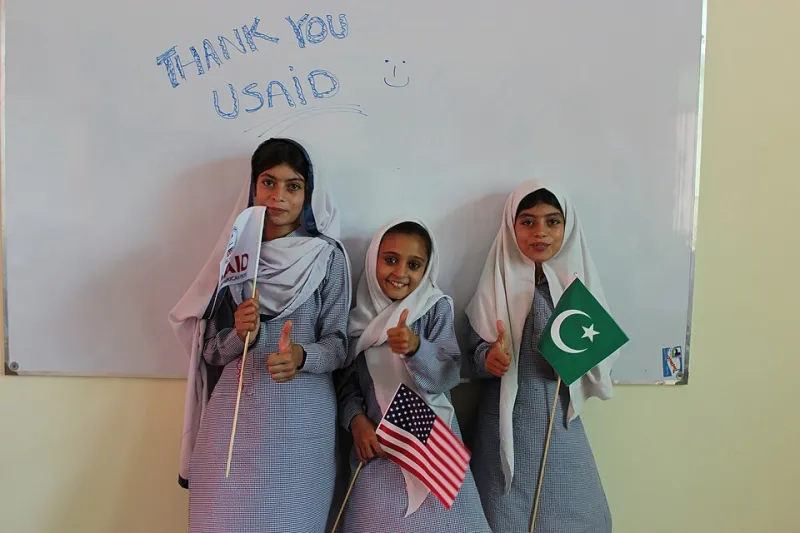
Photo: USAID Pakistan, Public domain, via Wikimedia Commons
For Pakistani-American families considering a move abroad—or expatriates relocating to Pakistan for professional assignments—navigating the country's education landscape can feel daunting. Pakistan's schooling sector has undergone significant transformation in recent decades, offering a range of internationally recognized institutions that rival many Western counterparts. This guide offers a grounded, practical overview for American parents weighing their options.
A System in Transition
Pakistan's education system is administered through a combination of federal oversight and provincial governance, with each of the country's four provinces—Punjab, Sindh, Khyber Pakhtunkhwa, and Balochistan—maintaining its own curriculum board. This decentralized structure means that the quality and character of schooling can vary considerably by region. However, the emergence of a robust private school sector, particularly in major urban centers such as Lahore, Karachi, and Islamabad, has created a tier of institutions that operate under internationally benchmarked standards.
For American parents accustomed to the Common Core framework or the International Baccalaureate (IB) program, it is worth noting that Pakistan's elite private schools have increasingly aligned their curricula with global educational frameworks. Many now offer the Cambridge Assessment International Education (CAIE) program—commonly known as the O-Level and A-Level system—which is widely accepted by universities across the United States and the United Kingdom.
Top-Tier Institutions Worth Knowing
Several schools in Pakistan have earned strong reputations among expatriate and diaspora communities. The Lahore Grammar School (LGS), with its network of campuses across Punjab, is among the most recognized names in Pakistani private education. Its curriculum is modeled on the Cambridge system, and its alumni include a significant number of students who have gone on to attend Ivy League and Russell Group universities.
In Islamabad, the Islamabad Model Colleges and institutions such as Roots International Schools offer structured academic programs with English as the primary language of instruction. Karachi, Pakistan's largest city, is home to the Karachi Grammar School—one of the country's oldest and most prestigious institutions, founded in 1847—as well as newer entrants such as the Foundation Public School, which has developed a strong track record in university placement.
For families specifically seeking an American-style educational experience, the American School of Islamabad (ASIS) offers a curriculum aligned with US educational standards and is accredited by the Middle States Association of Colleges and Schools. This institution is particularly popular among diplomatic families and American expatriates stationed in the capital.
How Pakistani Credentials Compare
A common concern among American parents involves how Pakistani academic credentials will be recognized upon a family's return to the United States. The short answer is: quite well, particularly for students who have completed the Cambridge O-Level or A-Level examinations.
O-Level qualifications are generally considered equivalent to a strong high school foundation, while A-Level results are frequently evaluated for college credit by US admissions offices, much in the same way Advanced Placement (AP) scores are assessed. Many Pakistani students who have completed their secondary education in the Cambridge system have successfully enrolled in selective American universities without academic remediation.
For younger children transitioning between the two systems, the adjustment is typically manageable. Pakistani private schools place a strong emphasis on mathematics and the sciences, and students often arrive in American classrooms with a competitive grounding in these subjects.
Scholarship and Financial Aid Opportunities
Families concerned about the financial dimensions of international schooling will find that Pakistan's education sector offers several noteworthy scholarship mechanisms. The Higher Education Commission (HEC) of Pakistan administers a range of merit-based scholarships for outstanding students, some of which are available to Pakistani nationals residing abroad. Additionally, a number of elite private schools maintain their own financial assistance programs designed to attract academically gifted students regardless of economic background.
For Pakistani-American families with children holding dual nationality, it is advisable to consult directly with prospective schools regarding eligibility criteria, as policies vary by institution. The Embassy of Pakistan in Washington, D.C., can serve as a useful point of contact for families seeking official guidance on navigating these processes.
Practical Considerations for Relocating Families
Beyond academics, American parents should consider several practical factors when evaluating schools in Pakistan. Language of instruction is one such consideration: while English is the medium of teaching in most elite private schools, Urdu is a compulsory subject, and children who have not previously studied the language may require supplementary tutoring during the initial adjustment period.
School calendars in Pakistan differ from the American academic year. Most institutions operate on a February-to-December schedule, though Cambridge-affiliated schools may follow a slightly different timetable aligned with examination cycles. Parents should factor these differences into relocation planning to minimize disruption to their children's academic progression.
Safety and infrastructure standards at reputable private institutions in major Pakistani cities are generally robust, with many schools employing dedicated security personnel and maintaining modern facilities. That said, it is prudent for families to conduct in-person visits and speak with current parents before making enrollment decisions.
A Bridge Worth Building
For Pakistani-American families, enrolling children in Pakistani schools—even temporarily—can offer something that no standardized curriculum can fully replicate: a living connection to cultural heritage, linguistic roots, and a society that is simultaneously ancient and rapidly modernizing. Students who experience education in both countries often emerge with a breadth of perspective that serves them well throughout their academic and professional lives.
The Pakistan Embassy USA encourages families navigating these decisions to reach out through official consular channels for personalized guidance. Education, after all, is among the most enduring bridges between communities—and between nations.