Spice, Story, and Shared Tables: How Pakistani Restaurateurs Are Rewriting America's Understanding of a Nation
A Table Set Between Two Worlds
In a corner booth of a Pakistani restaurant in Houston's Energy Corridor, a group of American engineers is debating the merits of seekh kebab versus chapli kebab. Their guide through this culinary terrain is the restaurant's owner, a Lahore-born entrepreneur who has spent fifteen years building not merely a business, but a conversation. "Every time someone asks me why our karahi tastes different from Indian food," he says, "I know I have their attention. That question is the beginning of everything."
This scene — repeated nightly in Chicago's Devon Avenue corridor, in the Pakistani enclaves of Queens, in the emerging South Asian dining strips of Northern Virginia — represents something far more significant than a restaurant industry trend. It reflects an evolving and deeply personal form of cultural diplomacy, one conducted not in conference rooms but across dining tables set with naan bread and fragrant daal.
As Pakistan and the United States continue to navigate a relationship of considerable strategic complexity, it is worth pausing to appreciate the quieter, grassroots architecture of mutual understanding being built by food entrepreneurs who carry their homeland's culinary heritage into American communities every single day.
The Geography of Flavor
One of the most remarkable gifts Pakistani cuisine offers American diners is its extraordinary regional diversity — a quality that frequently surprises those who arrive expecting a monolithic "South Asian" experience.
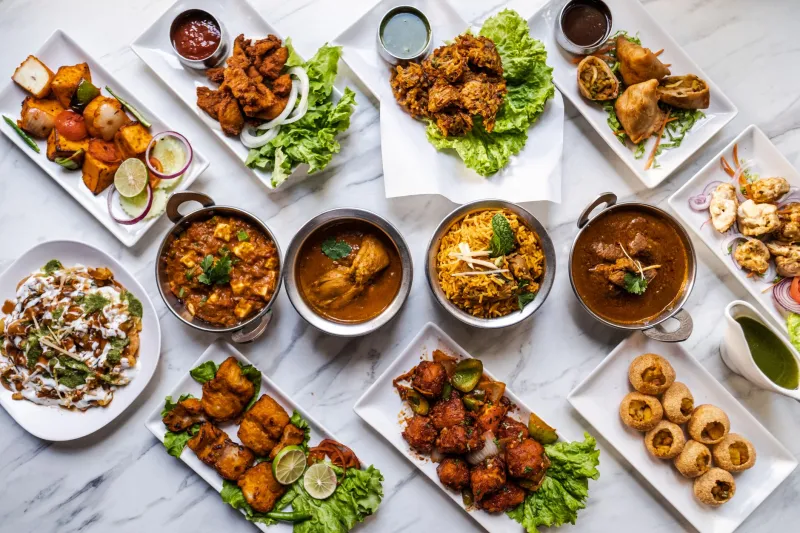
Pakistani food is, in truth, a federation of distinct culinary traditions. Lahori cuisine is celebrated for its unapologetic richness: the slow-braised nihari, the fiery paya, the tandoor-kissed breads that accompany dishes built on generations of Mughal influence. Karachi brings a coastal sensibility and a cosmopolitan layering of Sindhi, Balochi, and immigrant flavors. The Khyber Pakhtunkhwa region contributes the austere perfection of charcoal-grilled meats and the legendary chapli kebab. Gilgit-Baltistan offers hearty mountain cooking shaped by altitude and necessity.
Successful Pakistani restaurateurs in the United States have recognized that this regional storytelling is itself a form of cultural education. At a well-regarded Pakistani establishment in Chicago, the menu is organized not merely by dish type but by province of origin, each section accompanied by a brief note on the culinary traditions of that region. "Americans respond to context," the owner explains. "When they understand that Peshawar and Karachi are as different as New Orleans and Boston, something shifts in how they think about Pakistan."
From Family Recipe to Cultural Landmark
Many of the most influential Pakistani food establishments in America began not as calculated business ventures but as acts of preservation — an effort to keep alive the tastes of a homeland separated by thousands of miles.
In the Jackson Heights neighborhood of Queens, New York, several Pakistani restaurants trace their origins to families who arrived in the 1970s and 1980s, bringing with them recipes that had been refined across multiple generations. What started as modest storefronts serving the diaspora community have, over decades, evolved into neighborhood institutions drawing diverse clienteles from across the borough and beyond.
This trajectory — from community anchor to cultural landmark — is a pattern repeated in cities with significant Pakistani-American populations. In Fremont, California, in the suburbs of Atlanta, in the Pakistani restaurant clusters of Northern Virginia's Annandale neighborhood, food businesses founded to serve immigrants have become gateways through which American neighbors encounter Pakistan for the very first time.
The children and grandchildren of these founding entrepreneurs are now reshaping the model further. A new generation of Pakistani-American restaurateurs and food entrepreneurs is bringing elevated presentation, digital marketing sophistication, and an explicit commitment to cultural storytelling to the table. Food trucks, pop-up dining experiences, catering companies, and social media platforms are extending Pakistani culinary reach into communities and demographics that traditional restaurants have not always accessed.
The Diplomacy That Happens Over Chai
Formal diplomacy between nations operates through carefully structured channels — embassy communications, bilateral agreements, official cultural programs. These mechanisms are essential and irreplaceable. But experienced diplomats and cultural attaches will readily acknowledge that the most durable forms of mutual understanding are often built in less formal spaces.
Food operates in precisely those spaces. A shared meal lowers defenses, invites curiosity, and creates the conditions for genuine human exchange. When an American diner asks a Pakistani restaurant owner about the origins of a dish, or about the significance of Eid celebrations to the food served that week, or about why the bread is pulled from a clay oven rather than baked on a flat surface, the conversation that follows can accomplish something that no policy document can replicate.
This is food diplomacy in its most authentic form: not orchestrated, not programmatic, but organic and reciprocal. The restaurateur shares knowledge; the diner receives it with curiosity and, often, genuine warmth. Pakistan becomes, in that moment, not an abstraction encountered through news headlines but a living, textured, human reality — a place with regions and seasons, with family rituals and festive traditions, with a culinary heritage as complex and storied as any in the world.
Growth, Recognition, and the Road Ahead
The broader American food culture has begun to take notice. Pakistani cuisine has earned increasing coverage in major food publications, with critics and writers drawing careful distinctions between Pakistani and other South Asian culinary traditions and giving appropriate attention to the specific cultural contexts that shape Pakistani cooking. James Beard Award nominations have begun to reach Pakistani-American chefs. Food festivals in New York, Los Angeles, and Chicago now regularly feature Pakistani culinary programming.
This recognition matters beyond the restaurant industry itself. Every feature article that explains the difference between Lahori and Karachiwali cooking, every food festival appearance that introduces haleem or pani puri to a new audience, every cooking class that teaches an American home cook to prepare a Pakistani dish with its proper technique and cultural context — each of these represents a small but meaningful expansion of American understanding of who Pakistanis are and what Pakistan represents.
For the Pakistani-American community, this visibility carries particular significance. Food has long served as a vehicle of identity affirmation, a way of maintaining connection to heritage across the distances of migration. Seeing that heritage recognized and celebrated by the broader American public is a source of genuine pride.
An Invitation to the Table
The relationship between Pakistan and the United States is one of the most consequential bilateral partnerships in the contemporary world, shaped by decades of shared history, strategic cooperation, and the contributions of a vibrant Pakistani-American community. It is a relationship that benefits from every form of mutual understanding that can be cultivated.
In that context, the Pakistani restaurant owner who explains the difference between Punjabi and Sindhi cooking to a curious American customer, the food entrepreneur who sources Pakistani spices and shares their stories, the caterer who brings the flavors of Lahore to an American wedding reception — each of these individuals is performing a service that extends well beyond commerce.
They are setting a table between two nations. And they are inviting everyone to sit down.