Culture as Diplomacy: How Pakistan's Arts and Interfaith Initiatives Are Changing American Minds
In an era when a nation's image is shaped as much by its storytellers as by its statesmen, Pakistan has quietly assembled one of the most ambitious cultural outreach portfolios in the South Asian diplomatic world. Across American cities—from the concert halls of Washington, D.C., to community centers in Houston and university auditoriums in Chicago—a deliberate, sustained effort is underway to present Pakistan not as a geopolitical abstraction, but as a living civilization with a rich artistic heritage and a sincere desire for mutual understanding.
This is the architecture of soft power, and Pakistan is building it one cultural exchange at a time.
The Strategic Logic Behind Cultural Engagement
Traditional diplomacy operates through official channels: state visits, treaty negotiations, and bilateral agreements. These instruments remain indispensable, but they rarely reach the American neighbor, the college student, or the community organizer whose perceptions of Pakistan are often shaped by fragmentary media coverage rather than firsthand experience.
Cultural diplomacy addresses precisely this gap. By engaging Americans where they live—in theaters, at food festivals, in interfaith prayer spaces, and on university campuses—Pakistan's cultural initiatives create encounters that no formal communiqué can replicate. The goal is not propaganda; it is presence. When an American audience hears a Pakistani classical vocalist perform at a Lincoln Center program, or attends a panel discussion featuring Pakistani novelists at a local library, the encounter produces a kind of understanding that persists long after the event concludes.
Officials at the Embassy of Pakistan in Washington, D.C., have increasingly recognized this dynamic. Cultural programming has been elevated from an ancillary function to a core component of the diplomatic mission, with dedicated resources allocated to artist exchanges, film screenings, and community partnership initiatives that extend the Embassy's reach far beyond the Beltway.
Music as a Common Language
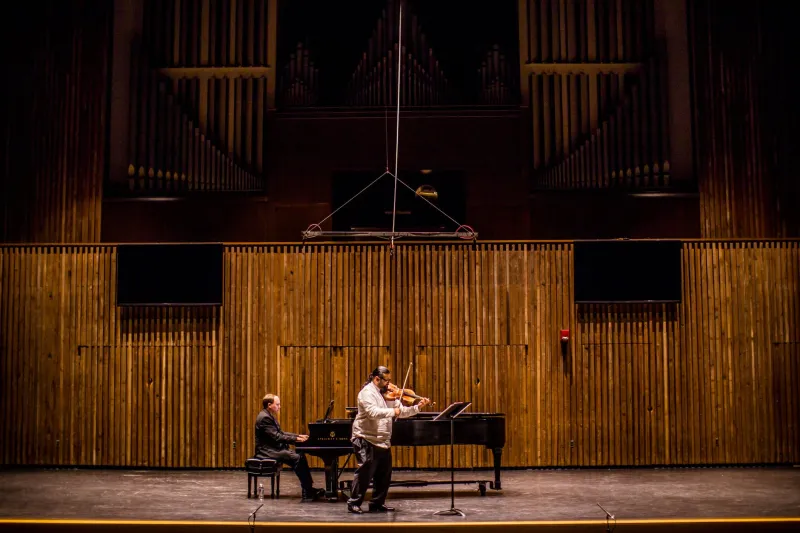
Few instruments of cultural diplomacy carry the immediacy of music. Pakistan's extraordinary musical traditions—from the devotional intensity of Qawwali to the intricate melodic structures of classical Raag, from the contemporary energy of Coke Studio collaborations to the folk traditions of Sindh and Balochistan—offer American audiences an entry point into a culture they may never have encountered on its own terms.
Tours organized in partnership with Pakistani cultural foundations have brought acclaimed musicians to venues across the United States, often pairing performances with pre-concert discussions that provide context for American listeners unfamiliar with the traditions being presented. These are not passive entertainment events; they are structured encounters designed to invite curiosity and sustain engagement.
The late Nusrat Fateh Ali Khan's enduring popularity in the United States—decades after his passing—demonstrates the lasting resonance that Pakistani musical culture can achieve with Western audiences when given the opportunity for authentic expression. Contemporary artists and cultural programmers are building deliberately on that foundation.
Literature, Film, and the Power of Narrative
The Pakistani literary tradition in English has produced writers of genuine international stature—Mohsin Hamid, Kamila Shamsie, and Daniyal Mueenuddin among them—whose novels have been taught in American universities, reviewed in major publications, and discussed in book clubs from Seattle to Atlanta. Cultural diplomacy initiatives that bring these writers into direct conversation with American readers are multiplying the impact of work that already commands significant attention.
Film screenings present a complementary avenue. Pakistani cinema has undergone a remarkable revival over the past decade, producing works of genuine artistic ambition that challenge reductive narratives about the country's social fabric. Curated screening series at American universities and cultural centers—often organized in collaboration with Pakistani-American community organizations—have introduced audiences to this cinematic renaissance, generating conversations that extend well beyond the credits.
Documentary programming has proven particularly effective. Films that center the lives of ordinary Pakistanis—farmers in Punjab, entrepreneurs in Lahore, artists in Karachi—carry an authenticity that no government press release can approximate. When American viewers encounter these stories, they are meeting Pakistan on human terms.
Interfaith Dialogue and the Reframing of Islam
Perhaps the most consequential dimension of Pakistan's cultural diplomacy in the United States concerns the country's role in conversations about Islam. As a nation whose constitutional identity is intertwined with Islamic faith but whose lived religious culture is extraordinarily diverse—encompassing Sufi traditions, minority communities, and a robust tradition of scholarly debate—Pakistan occupies a unique position in the global Islamic landscape.
Interfaith dialogue programs, many of them organized in partnership with American religious institutions and civil society organizations, have created platforms for Pakistani scholars, clerics, and community leaders to engage directly with American audiences on questions of faith, modernity, and coexistence. These conversations carry particular weight at a moment when misunderstandings about Islam remain widespread in American public life.
The Sufi tradition, with its emphasis on love, devotion, and the interior dimensions of spiritual practice, has resonated strongly with American audiences across religious backgrounds. Cultural programs that foreground this dimension of Pakistani Islamic practice are not distorting Pakistan's religious identity; they are illuminating a dimension of it that is both authentic and genuinely compelling to Western audiences.
Community Partnerships and the Diaspora Multiplier
No account of Pakistan's cultural diplomacy in the United States would be complete without acknowledging the indispensable role of the Pakistani-American diaspora. With an estimated half-million Pakistani-Americans distributed across major metropolitan areas, this community functions as both audience and amplifier for cultural initiatives that originate from official or semi-official sources.
Community organizations—cultural associations, mosque communities, professional networks, and student groups—frequently serve as co-organizers and co-sponsors of events that bear the Embassy's imprimatur. This partnership model extends the reach of official programming while lending it the credibility and local knowledge that diaspora organizations possess in abundance.
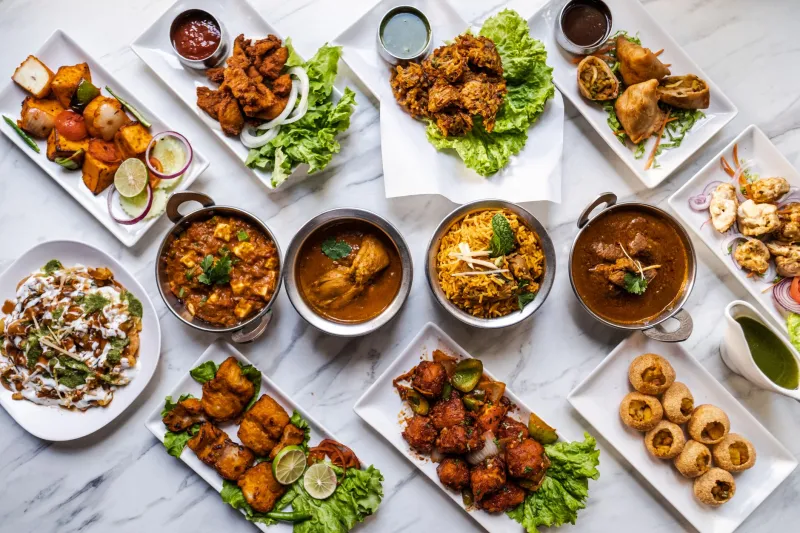
The relationship is reciprocal. When Pakistani-American communities host Eid celebrations, Basant kite festivals, or Lahori food markets that draw non-Pakistani neighbors and colleagues, they are functioning as informal cultural ambassadors whose impact the Embassy actively seeks to support and amplify.
Measuring Impact in an Immeasurable Domain
The challenge of cultural diplomacy lies partly in its resistance to quantification. How does one measure the diplomatic value of a Qawwali performance that moves an audience member to research Pakistan's history for the first time? How does one calculate the long-term impact of a Pakistani novelist's campus visit on the future foreign policy views of students in the room?
These outcomes are real, but they accumulate slowly and manifest in ways that resist easy attribution. What the evidence does suggest, consistently, is that direct cultural encounter is among the most effective means of disrupting entrenched stereotypes. Americans who have attended a Pakistani cultural event, shared a meal with a Pakistani family, or read a Pakistani novel approach subsequent news coverage of Pakistan with a richer, more nuanced frame of reference.
That shift in perception—modest in any individual case, but significant in aggregate—is precisely what Pakistan's cultural diplomacy is designed to produce.
A Long-Term Investment in Understanding
The most important characteristic of effective cultural diplomacy is patience. The returns on investment in arts exchanges, literary programs, and interfaith dialogues are not measured in news cycles or diplomatic communiqués. They are measured in the gradual accumulation of goodwill, curiosity, and mutual respect among populations whose governments may not always find it easy to agree.
Pakistan's commitment to this form of engagement reflects a mature understanding of how durable international relationships are actually built. The formal partnership between Islamabad and Washington rests on a foundation of shared strategic interests. But the friendship between two peoples—the kind that weathers political turbulence and survives changes in administration—must be cultivated through precisely the kinds of human encounters that cultural diplomacy makes possible.
In concert halls and community centers, on university campuses and in interfaith dialogue circles, that work continues. Quietly, persistently, and with growing sophistication, Pakistan is making its case to America—not through argument alone, but through art, story, and the irreducible power of shared human experience.